Why Implant Consults Are Won on the Phone
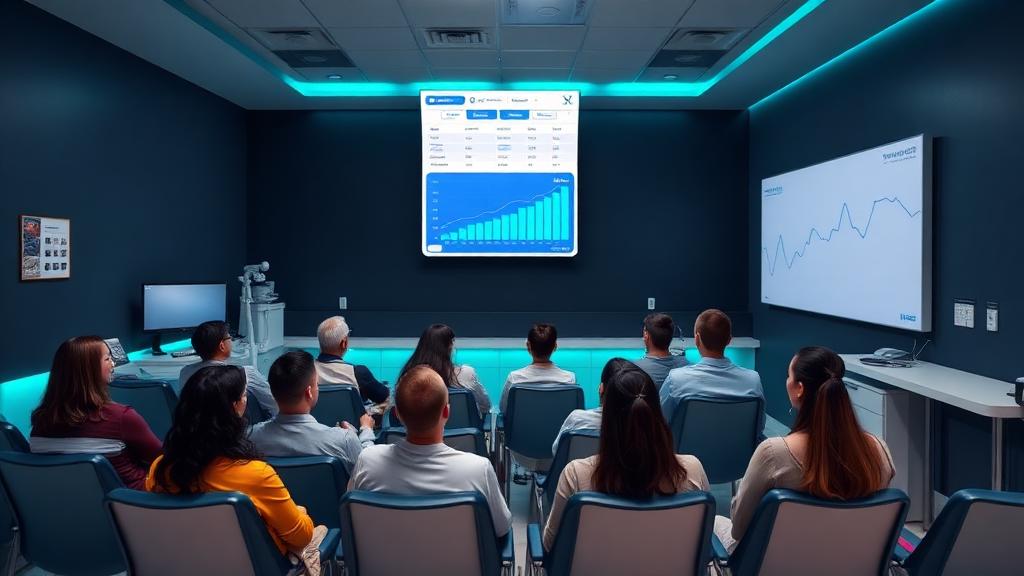
Full-arch prospects call five practices in an hour. The one that answers with a real range and an immediate scan appointment books the case.
Table of Contents
Implant cases are researched for months and decided in about four minutes. That asymmetry is the whole story of implant marketing, and most practices are on the wrong side of it.
The full-arch shopper calls five practices in an hour
A prospective All-on-4 patient has usually been reading for weeks before they pick up the phone. When they finally do, they work the search results in sequence. The first practice to answer with a credible number and a specific appointment usually gets the consultation.
Being fourth on the page matters far less than being the first to answer. Practices routinely spend thousands a month on ads to move up a position, while losing a third of the resulting calls to voicemail.
Refusing to quote is the most expensive policy in the practice
The standard instruction — "we can't discuss pricing over the phone, let's get you in for a consultation" — is designed to protect case presentation. In practice it reads as evasion to a caller who has already seen ranges on three competitor websites.
The alternative is not quoting an exact figure. It is quoting a range with the variables named: "upper arch cases here run twenty-two to twenty-seven thousand depending on grafting and the final prosthesis, with financing from around three hundred and forty a month." That answers the real question, which is affordability, and moves directly to the appointment.
Practices that adopt this consistently book noticeably more consultations from the same call volume. The consultation-to-case conversion rate does not fall, because the caller who was never going to afford it was never going to convert anyway — they were just going to occupy a forty-five minute chair.
Prepare the consult during the booking call
The difference between a consultation that closes and one that becomes a second consultation is preparation. By the time the patient arrives, you want three things already in hand: medical history, current imaging status, and a financing pre-qualification.
All three can be collected during or immediately after the booking call. A secure form link and a lender pre-qualification link sent by text while the caller is still engaged get completed at far higher rates than the same links sent two days later.
The post-extraction referral window
A significant share of single-implant inquiries come from patients who had a tooth extracted elsewhere and were told to consider an implant. That conversation has a decay curve: the longer the site heals without a plan, the more likely the patient decides to live without the tooth.
Capturing extraction date on the call lets you sequence the consultation correctly and gives your treatment coordinator a genuine reason to follow up.
After-hours matters more than practices expect
Implant research happens in the evening. So do the calls. A practice with no after-hours answering is invisible to a meaningful fraction of its own advertising spend, which is a strange position to be in voluntarily.
What to track
Three metrics: inbound implant inquiries by hour, the share that end in a booked consultation, and the share of booked consultations that arrive with imaging and financing already handled. The first tells you what coverage you need, the second tells you whether the pricing script works, and the third predicts your case acceptance rate more reliably than anything your treatment coordinator can control on the day.
The uncomfortable comparison
A full-arch case is worth roughly twenty-four thousand dollars. A month of automated 24/7 answering is under a thousand. If answering the phone properly produces one additional case a year — and for most implant practices it produces considerably more — everything else in the analysis is rounding error.
Mirza Umaid Baig
Co-Founder, Wavez Automation
Co-founder building AI phone infrastructure for US dental practices.
Mirza co-founded Wavez Automation to fix the single biggest revenue leak in independent dental practices: missed phone calls. He works directly with solo dentists and 1–5 location groups on voice-AI deployment, PMS integrations (Dentrix, Open Dental, Eaglesoft), and HIPAA-aligned call workflows.
View author profile →Related Articles

Ready to Transform Your Practice?
See how Wavez AI receptionist can help you capture more appointments, reduce missed calls, and grow your revenue—starting in just 48 hours.