7 Reasons to Invest in an AI Receptionist in 2026
A persuasive buyer's guide to AI receptionists: cost savings, 24/7 availability, CX, scalability, integrations, analytics, and competitive edge.
Table of Contents
Every modern business runs on conversations—phone calls, inquiries, bookings, support requests. Yet most companies still rely on a fragile mix of overworked receptionists, voicemail, and call centers that drop the ball when it matters most. Enter the AI receptionist: a virtual receptionist powered by natural-language AI that answers every call, routes intelligently, books appointments, and never sleeps.
In 2026, an AI receptionist isn't a futuristic experiment—it's a competitive necessity. From single-location clinics and law firms to multi-site retailers and SaaS companies, businesses across industries are replacing missed calls and clunky IVR menus with intelligent AI phone answering. If you're a decision-maker evaluating automated customer service tools, here are the 7 reasons every business should invest in an AI receptionist this year.
1. Dramatic Cost Savings and Faster ROI
The most immediate reason businesses adopt an AI receptionist is the bottom-line math. A full-time human receptionist in the US costs $38,000–$55,000 per year in salary alone, before benefits, training, turnover, and overtime. Add a second shift for after-hours coverage and the number doubles.
An AI receptionist typically costs $200–$800 per month—roughly 90% less than a single full-time hire while covering 24/7/365. There are no sick days, no PTO, no onboarding cycles, and no churn. For most businesses, the platform pays for itself within the first 30 days simply by recovering missed-call revenue.
Real-world example: A 3-location dental group replaced two part-time after-hours receptionists with a virtual receptionist and saved $74,000 in annual labor while increasing booked appointments by 22%. That's a payback period of under 3 weeks.
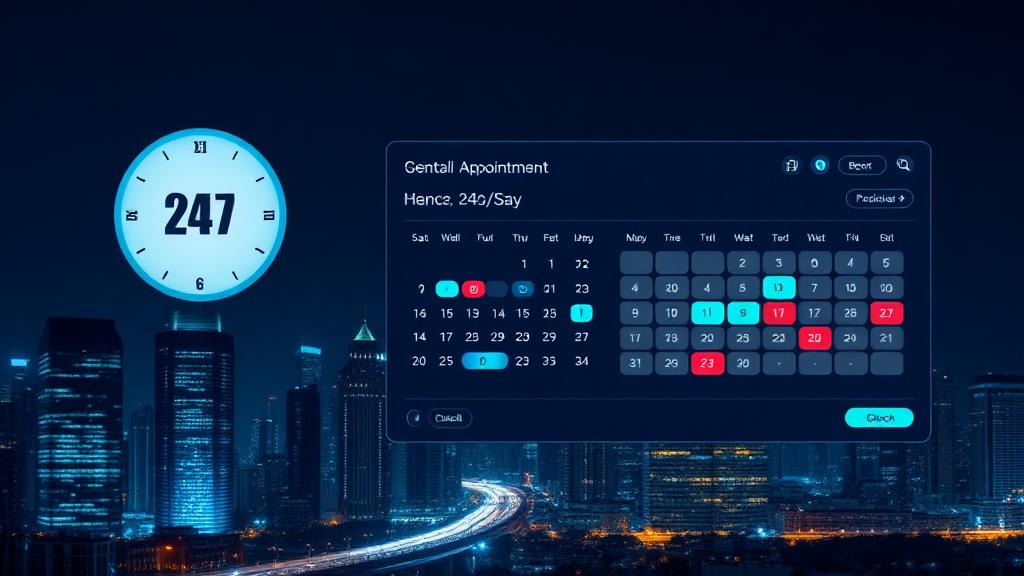
2. 24/7 Availability and Instant Response Times
Studies from Harvard Business Review show that businesses responding to leads within 1 minute are 391% more likely to convert them. The problem? The average human team responds in 47 hours—if at all. Calls placed after 5pm, on weekends, or during lunch breaks are routinely lost to voicemail or competitors.
An AI receptionist answers on the first ring, every time, around the clock. It handles holidays, late-night emergencies, and traffic spikes during marketing campaigns without breaking a sweat. For service businesses, this is the single biggest lever for revenue growth.
Data point: Businesses using AI phone answering report a 35–60% reduction in missed calls within the first month, with most converting 1 in 3 of those previously lost calls into booked revenue.
3. Elevated Customer Experience and Satisfaction
Modern AI receptionists no longer sound like robotic IVR menus ("Press 1 for sales, press 2 for…"). Today's voice AI uses large language models and natural-sounding speech to hold genuine conversations—understanding context, handling interruptions, and switching languages on the fly.
The result is a customer experience that often exceeds what an overworked human could deliver. No hold music. No "let me transfer you." No frustrated callers hanging up. Just instant, polite, accurate help.
Concrete example: A national HVAC company saw its CSAT scores rise from 78% to 94% in 90 days after deploying an AI receptionist that answered instantly, captured detailed service requests, and texted callers a confirmation summary before ending the call.
4. Effortless Scalability for Growing Businesses
Hiring is the bottleneck of growth. Every new location, marketing campaign, or seasonal spike forces businesses to scramble for staff—or accept dropped calls. An AI receptionist scales instantly. Whether you receive 50 calls a day or 5,000 in an hour after a Super Bowl ad, the system handles every conversation in parallel without queueing.
This elasticity is especially powerful for franchises, multi-location healthcare groups, and e-commerce brands during peak season. You add capacity with a toggle, not a job posting.
Data point: A retail chain that expanded from 12 to 47 stores in 18 months kept the same 2-person customer service team because their AI receptionist absorbed 89% of inbound call volume.
5. Seamless Integration with Your Existing Stack
A common objection to automated customer service is, "It won't work with our systems." Modern AI receptionists are built around integration. They plug directly into:
- CRMs like Salesforce, HubSpot, and Zoho—logging every call as a lead or contact update
- Helpdesk platforms like Zendesk, Intercom, and Freshdesk—creating tickets in real time
- Calendars and PMS like Google Calendar, Calendly, Dentrix, and Open Dental—booking directly into live availability
- Phone systems like Twilio, RingCentral, and traditional VoIP—forwarding numbers in minutes
This means no rip-and-replace project. The AI receptionist sits on top of what you already have and quietly makes it 10x more responsive.
Example: A law firm connected their AI receptionist to their existing intake CRM and calendar in a single afternoon. Within a week, every after-hours call was logged, qualified, and either booked into a consultation or routed to the on-call attorney—zero developer time required.
6. Powerful Data Collection and Analytics
Every conversation an AI receptionist handles becomes structured, searchable data. You instantly know:
This level of visibility is impossible with human receptionists, who simply don't have time to log everything. With AI, you finally get the same analytics rigor for phone conversations that you already have for web traffic and email.
Real-world impact: A medspa discovered through AI call analytics that 41% of inquiries asked about a specific package they weren't promoting on their website. They updated their landing page and saw a 27% increase in conversions the following month.
7. A Powerful Competitive Advantage and Modern Brand Image
Customers notice when a business answers instantly, knows their history, and resolves issues without friction. They also notice when they're shuffled through phone menus, left on hold, or sent to voicemail. In a market where switching costs are low and reviews are public, the speed and quality of your phone experience is a brand statement.
Deploying an AI receptionist signals that your business is modern, efficient, and customer-first. It also future-proofs you against competitors who are quietly adopting the same technology and pulling ahead.
Data point: 78% of consumers say they'll choose a business that responds faster, even if the price is slightly higher (Salesforce State of the Connected Customer, 2025). Speed has become the new differentiator—and AI receptionists deliver it consistently.
Who Should Invest in an AI Receptionist?
While the technology is industry-agnostic, the highest-ROI segments today include:
- Healthcare and dental clinics capturing after-hours bookings
- Home services (HVAC, plumbing, electricians) responding to emergency calls
- Legal and financial services qualifying leads quickly
- Real estate teams never missing a buyer inquiry
- E-commerce and SaaS scaling support without scaling headcount
- Hospitality and salons automating reservations
If your business depends on inbound phone conversations and you've ever lost a customer to a missed call, you're in the target audience.
Common Objections (and Honest Answers)
"Won't customers hate talking to a bot?" Modern AI sounds human, holds context, and resolves most calls faster than a human could. CSAT data consistently shows callers prefer it to voicemail or IVR menus.
"What about complex calls?" AI handles 70–90% of routine calls and seamlessly transfers the rest to a live human with full context, eliminating the "start over" frustration.
"Is it secure and compliant?" Leading platforms are HIPAA-, SOC 2-, and GDPR-compliant out of the box, with encrypted call recordings and audit logs.
Conclusion: The Time to Act Is Now
An AI receptionist isn't just an upgrade to your phone system—it's a multiplier for revenue, customer experience, and operational efficiency. Cost savings, 24/7 coverage, better CX, infinite scalability, deep integrations, real analytics, and a stronger brand—all from a single platform that pays for itself in weeks.
The businesses winning in 2026 aren't waiting. They've already replaced missed calls and outdated IVR with intelligent AI phone answering. The question isn't whether you'll adopt an AI receptionist—it's how much revenue you'll lose before you do.
Ready to see what an AI receptionist can do for your business? Book a free demo today and see your first conversation handled in minutes.
Frequently Asked Questions
Q1: How is an AI receptionist different from an IVR or voicemail?
A: An IVR forces callers through rigid menus; voicemail captures messages no one returns. An AI receptionist holds a real conversation, answers questions, books appointments, and integrates with your systems—instantly, every time.
Q2: How long does it take to set up an AI receptionist?
A: Most businesses are live in 24–72 hours. Setup involves forwarding your number, configuring a knowledge base from your FAQs and website, and connecting your calendar or CRM.
Q3: Will an AI receptionist replace my human staff?
A: No—it removes the repetitive 70–90% of calls (booking, FAQs, routing) so your team can focus on high-value conversations and in-person service. Most businesses redeploy staff rather than reduce headcount.
Wavez Editorial
Wavez Automation Research Desk
Editorial byline reviewed by the Wavez founders before publication.
The Wavez Editorial byline covers research, buyer's-guide, and reference articles compiled by the Wavez Automation team. Every editorial piece is reviewed by co-founders Mirza Umaid Baig or Abdul Ghani Bin Ahmed before publication and cites vendor and government sources where possible.
View author profile →Related Articles

Ready to Transform Your Practice?
See how Wavez AI receptionist can help you capture more appointments, reduce missed calls, and grow your revenue—starting in just 48 hours.