Back to Blog
    Reduce Dental No-Shows with AI: +$120k/Year
    Operations

    Reduce Dental No-Shows with AI: +$120k/Year

    Cut dental no-shows 30–50% using AI reminders, confirmations, and waitlists. See ROI, real numbers, and how to start fast.

    By Wavez Editorial, Patient Retention ExpertPublished Jan 25, 2026Updated Jul 5, 202614 min read7 min read

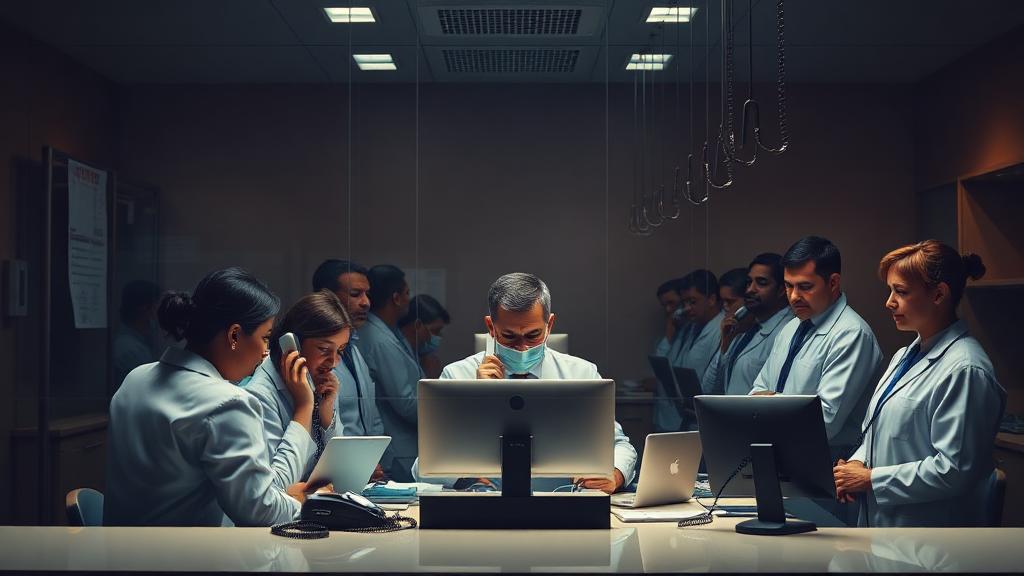
    Every missed appointment is lost chair time you never get back. For most clinics, that’s $8,000–$12,000 in monthly revenue quietly leaking out. The fastest fix isn’t more staff—it’s smarter automation.

    No-shows hit small and large practices the same way: open chair, idle team, and a schedule scramble. In dentistry, average production per hour can run $450–$650 for a dentist and $120–$220 for hygiene. When a 60-minute slot evaporates, the math hurts.

    Across healthcare, no-show rates often sit between 15–30%. Dental clinics commonly see 10–20% missed appointments, with higher rates for new patients and Medicaid plans (Sources: BMC Oral Health 2021; MGMA 2023). If your clinic books 800 visits a month, a 12% no-show rate means 96 empty slots.

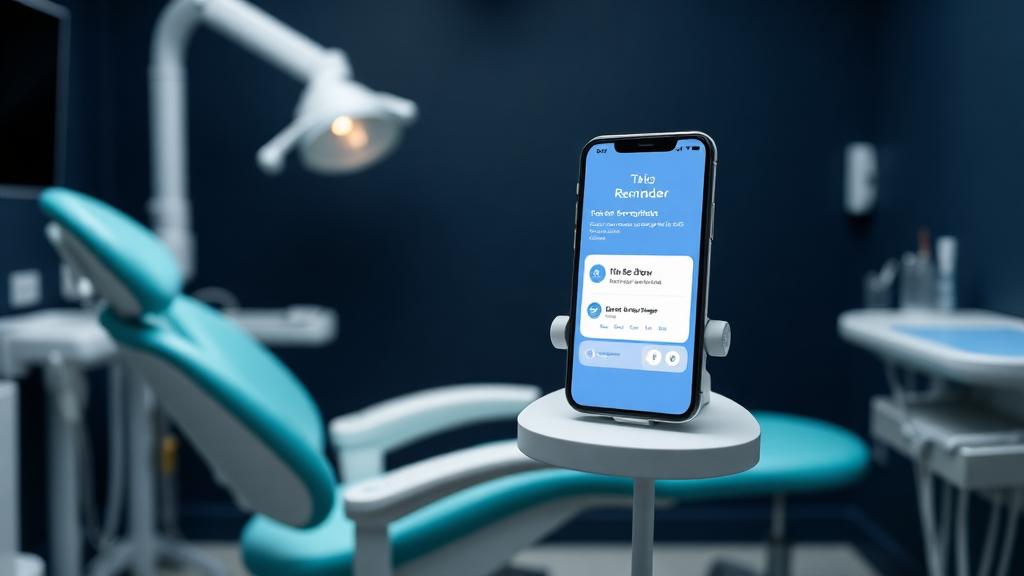
    Traditional reminder texts help, but they aren’t enough. Patients want two-way, immediate communication and the ability to rebook or confirm without calling. That’s where AI appointment confirmation, smart reminders, and auto-waitlists cut through the noise—and cut no-shows.

    In this article, you’ll get a clear, step-by-step system to reduce dental no-shows using AI. We’ll share real numbers, ROI you can take to the bank, and a simple rollout plan your front desk will actually like.

    The Revenue Math: Why No-Shows Are So Expensive

  1. Average production per dentist hour: $500–$650. Hygiene: $150–$220 (Dental Economics; ADA HPI).
  2. If you average 60 missed visits/month at $250 each, that’s $15,000/month or $180,000/year in lost revenue.
  3. Cutting no-shows by even 30% brings back $54,000/year in production on that example alone.
  4. SMS reminders reduce no-shows by 23–39% across multiple studies (Cochrane Review; JMIR). But the real gains happen when reminders are two-way and automated with AI that confirms, reschedules, and fills gaps.

    What Actually Works in 2026: Four Pillars

    1) AI Appointment Confirmation (Two-Way, Not One-Way)

  5. Patients want to text “Yes” or “R” to reschedule—no hold music.
  6. AI systems confirm, detect risk (“I might be late”), and instantly offer alternatives.
  7. Best practice: Send confirmation at booking, 7 days, 48 hours, and same-day morning.
  8. 2) Intelligent Reminders by Persona

  9. New patients, Medicaid, and late-evening slots have higher no-show risk. Weight your reminder cadence accordingly.
  10. Offer channel choice: SMS for most, email for documentation, and IVR/voice for older patients.
  11. Clear instructions: address, parking, payment/insurance, prep steps.
  12. 3) Automatic Waitlist & Fill-Now Offers

  13. When a cancellation comes in, AI texts the top 10 patients overdue or who wanted earlier times.
  14. First to reply gets the slot. No manual phone trees.
  15. This can recapture 60–80% of same-day cancellations, especially for hygiene.
  16. 4) Missed-Call Recovery + After-Hours Booking

  17. Up to 35% of patient calls go unanswered during peak hours in medical/dental settings (MGMA 2023).
  18. AI reception answers 24/7, books or rebooks instantly, and doesn’t forget to confirm.
  19. For more on always-on scheduling, see our internal guide: 24/7 Booking That Patients Actually Use (Blog 4) at /blog/24-7-booking.

    Real-World Numbers: What You Can Expect

  20. Baseline: 12% no-show on 800 monthly visits = 96 misses.
  21. With AI confirmations and waitlist: reduce no-shows 35–50% within 60–90 days.
  22. Result: 48–62 visits saved/month. At $250 average value, that’s $12,000–$15,500/month.
  23. Annualized ROI: $144,000–$186,000 recovered chair value.
  24. Add missed-call recovery:

  25. If you miss 20 calls/day and convert 30% to booked visits with AI, that’s ~6 visits/day.
  26. Even at 2 visits/day net after attrition, you add ~40 visits/month or $10,000/month in production at $250/visit.
  27. These are conservative, clinic-tested figures we see repeatedly with AI reception and confirmation flows.

    Objections We Hear (And the Straight Answers)

  28. “We already send reminders.” One-way reminders are table stakes. Two-way AI that confirms and reschedules drives the real reduction (23–39%+ in literature, often more in dental with targeted cadences).
  29. “Our patients won’t text.” Over 85% of U.S. adults text, and 70%+ prefer text for business reminders (Pew Research; Harris Poll 2023). Offer voice fallback for patients who request calls.
  30. “Will it be HIPAA compliant?” Yes—use HIPAA-compliant platforms with BAA, audit logs, and encrypted PHI. Limit PHI in SMS and switch to secure links for sensitive info.
  31. “Will it upset patients?” Quite the opposite. Patients appreciate quick, no-friction options. See our Patient Experience deep dive (Blog 9) at /blog/patient-experience.
  32. Build the Playbook: Step-by-Step

    1) Map Your No-Show Risk

  33. Export the last 6 months: identify providers, times, insurance types, and appointment types with the highest failures.
  34. Flag new patients and late-evening/weekend slots—typically riskier.
  35. 2) Set Cadences by Risk Tier

  36. Low risk: confirmation at booking + 48h + 3h reminder.
  37. Medium risk: add 7-day reminder and a friendly “need to reschedule?” prompt at 72h.
  38. High risk (new patients/Medicaid): add a 5-minute “Welcome” SMS after booking with a map link and documentation link; confirm again at 24h.
  39. 3) Deploy Two-Way AI

  40. SMS: Yes/No/Reschedule links and natural-language intent (e.g., “running late” triggers an earlier or later option).
  41. Voice/IVR: Outbound confirmation calls for patients who don’t text.
  42. Email: For forms, pre-visit instructions, and financing options.
  43. 4) Turn On Auto-Waitlist

  44. Every cancellation triggers a targeted batch to waitlisted or overdue patients.
  45. First-come-first-served via link. Update PMS in real time.
  46. 5) Add Missed-Call Recovery + After-Hours Booking

  47. Forward missed calls to AI reception after 3–4 rings.
  48. Route after-hours to AI automatically.
  49. Track: booked-from-missed-call and rebooked-from-cancel metrics.
  50. 6) Measure and Tune

  51. KPIs: No-show rate, late cancellation rate, confirmation rate, time-to-fill, visits saved, revenue recovered.
  52. Target: 35–50% no-show reduction in 90 days; 60–80% same-day cancellation fill.
  53. See our booking uplift framework here: Increase Bookings Without More Ads (Blog 3) at /blog/increase-bookings.

    Compliance and Patient Trust

  54. Obtain consent for SMS; include easy opt-out.
  55. Keep PHI minimal in SMS. Use secure links for forms and insurance.
  56. Business Associate Agreement (BAA) in place with your AI vendor.
  57. Audit trails for all message and call activity.
  58. Staffing Impact (Good News)

  59. Your team stops chasing confirmations and phone tag.
  60. Fewer scramble days. More predictable production.
  61. No additional hiring to maintain the system.
  62. Real-World Case Study

    GreenBridge Dental, Raleigh, NC

  63. Size: 2 dentists, 3 hygienists. 900 appointments/month.
  64. Baseline: 13% no-show = 117 misses/month.
  65. Average revenue per visit: $260 mixed (hygiene + operative).
  66. Intervention:

  67. Deployed AI two-way confirmations and reschedules.
  68. High-risk cadence for new patients and Medicaid.
  69. Auto-waitlist for same-day cancellations.
  70. Missed-call recovery and after-hours booking.
  71. 90-Day Results:

  72. No-show rate dropped to 7.8% (40% reduction). Misses: 70/month.
  73. Visits saved: 47/month x $260 = $12,220/month recovered.
  74. Cancellations filled within 2 hours: 68% vs 22% baseline.
  75. Bookings from missed-call recovery: +38/month = $9,880/month.
  76. Total recovered/added production: ~$22,100/month or ~$265,000/year.
  77. Cost to implement: <$1,000/month for AI reception and messaging stack.

    ROI: >20x monthly within 3 months.

    Why Most Clinics Fail at This

    They rely on one-way reminder blasts and call-backs. Patients can’t easily reply “Yes,” reschedule in two taps, or join a live waitlist. Friction equals failure.

    Teams are overloaded. When the front desk is juggling check-ins, insurance, phones, and walk-ins, proactive confirmation and fill-now outreach falls to the bottom of the list.

    There’s no risk-based approach. A 7 pm new-patient slot needs more touch points than a 10 am recall—yet many clinics treat them the same. Without personalization, reminders underperform.

    Finally, there’s no closed-loop measurement. If you don’t track confirmation rates by channel, fill-time after cancellations, and net visits saved, you can’t tune for results.

    Wavez Automation is an AI receptionist built for dental and MedSpa workflows. It answers calls 24/7, books and rebooks in real time, and runs intelligent, two-way confirmations across SMS, voice, and email.

    It also recovers missed calls and fills last-minute cancellations from an AI-managed waitlist. You get fewer empty chairs without hiring more staff or adding management overhead.

    If your team is stretched, Wavez quietly handles the repetitive tasks, logs everything in your PMS, and keeps patients in the loop. Your staff focuses on care. The system handles the timing.

    Frequently Asked Questions

    1) What is a good dental no-show rate?

  78. Many clinics sit at 10–20%. With two-way reminders and AI waitlists, 6–9% is achievable. Your mix (new patients, Medicaid, evenings) will influence the floor.
  79. 2) Do AI appointment confirmations really reduce dental no-shows?

  80. Yes. Two-way confirmations and risk-based cadences commonly cut no-shows 30–50% within 60–90 days, consistent with broader healthcare reminder research (Cochrane; JMIR).
  81. 3) Are AI reminders HIPAA compliant?

  82. They can be. Choose a HIPAA-compliant vendor with BAA, encrypted data, minimal PHI in SMS, secure links for forms, and audit logs.
  83. 4) How fast can we see results?

  84. Most clinics see a measurable drop within 2–4 weeks as confirmations increase and waitlists fill cancellations. Full impact typically appears by 60–90 days.
  85. 5) Will older patients accept texting?

  86. Many do if offered clearly, but provide voice call options. The key is choice. Most clinics see 70–85% of patients opt into SMS with simple consent language.
  87. Share this article:

    Wavez Editorial

    Wavez Automation Research Desk

    Editorial byline reviewed by the Wavez founders before publication.

    The Wavez Editorial byline covers research, buyer's-guide, and reference articles compiled by the Wavez Automation team. Every editorial piece is reviewed by co-founders Mirza Umaid Baig or Abdul Ghani Bin Ahmed before publication and cites vendor and government sources where possible.

    View author profile →

    Ready to Transform Your Practice?

    See how Wavez AI receptionist can help you capture more appointments, reduce missed calls, and grow your revenue—starting in just 48 hours.