Product

    6 Steps to Recover Missed Dental Calls (2026 Playbook)

    Most practices do not have a marketing problem. They have a phone problem, and it is measurable in six numbers.

    Wavez Team9 min read
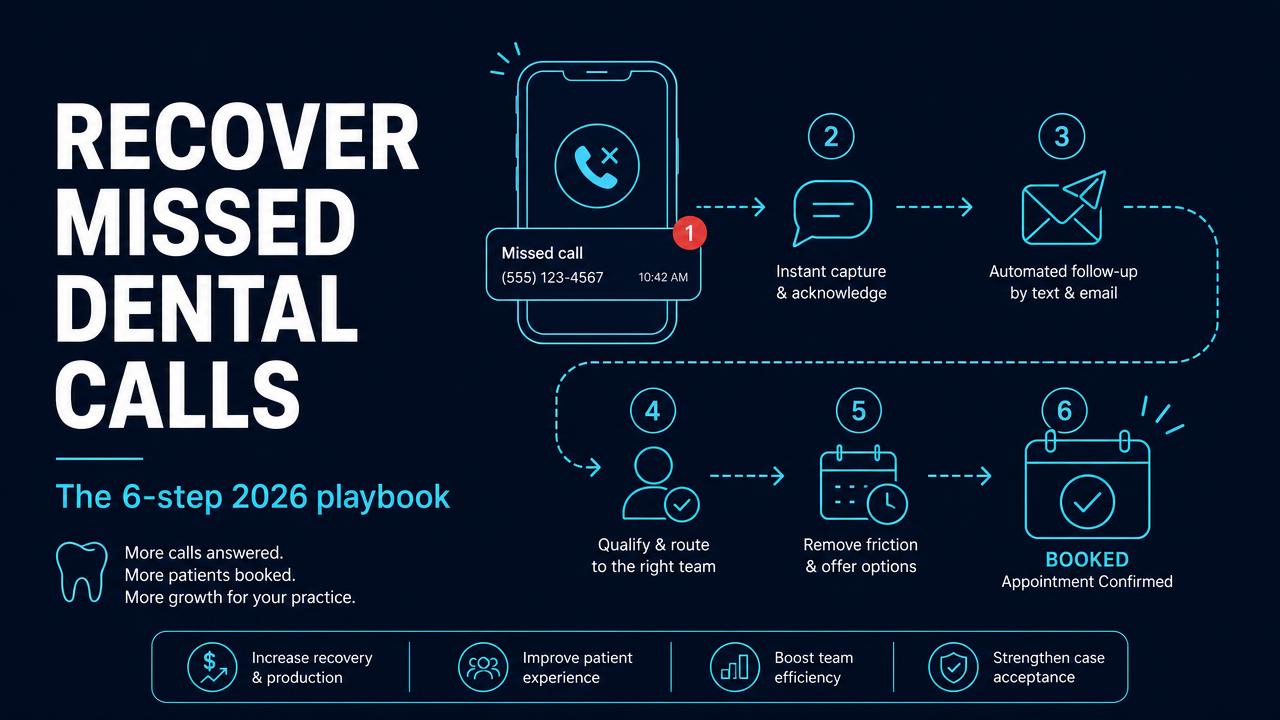
    Illustration of a person catching a missed call while a colleague ticks a checklist

    Step 1: get the six numbers

    Before buying anything, pull one month of call logs from your phone system. You need six numbers, and most practices are surprised by at least three of them.

    1. Missed-call rate — unanswered ÷ total inbound.
    2. Average answer speed — rings before pickup. Past four rings, abandonment climbs sharply.
    3. After-hours share — calls outside published hours, including weekends.
    4. Booking rate on answered calls — the ceiling on everything else.
    5. Abandonment during hold — callers who hung up while waiting.
    6. Revenue per answered new-patient call — first-year production ÷ new patients booked.

    Multiply the missed-call count by your new-patient mix and revenue per call and you have the size of the problem in dollars. The missed-call revenue calculator does the arithmetic.

    Steps 2–4: segment, protect the windows, enforce the callback

    Segment by call type

    Not all missed calls cost the same. A missed reschedule usually calls back. A missed new-patient call usually does not. Rank your four core types — new patient, reschedule, insurance question, emergency — and protect them in that order.

    Protect the four windows

    • Lunch (12–2pm). The single biggest daytime leak in solo practices.
    • Hygiene handoffs. Ten-minute blind spots repeated six times a day.
    • After 5pm and weekends. Where working patients actually call from.
    • Monday 8–10am. Weekend demand arriving all at once.

    The 60-second callback rule

    If a call is missed, the callback should leave within 60 seconds, not "later today." Speed matters more than polish: a fast, plain callback outperforms a careful one an hour later, because by then the patient has booked elsewhere.

    Pair every missed call with an immediate SMS containing a booking link. Some patients will not answer an unknown number but will tap a link within seconds.

    Steps 5–6: close the loop and review

    A recovery process that ends in a sticky note is not a process. Every missed call should end in a PMS outcome: booked, declined, or callback scheduled with an owner and a time. If your system cannot show last month's missed calls and their outcomes, you are managing on vibes.

    Then read transcripts. Twenty calls a month, once a month, with the practice owner in the room. Every recurring question a caller asks that your team fumbles is an FAQ entry — and once it is written down, both your staff and your AI receptionist answer it identically forever.

    This is where automation compounds. An AI receptionist removes the four windows entirely, and the transcripts it produces make the review step trivial instead of a call-recording archaeology project.

    Run your own numbers first. If the recovered revenue is smaller than the monthly cost, we will tell you not to buy.

    Open the calculator

    Frequently asked questions

    Independent phone audits of US dental practices consistently find 20% to 35% of inbound calls unanswered, concentrated in lunch hours, hygiene handoffs, after-hours and Monday mornings.